Winter Gritting Explained: How Councils Decide When to Salt the Roads
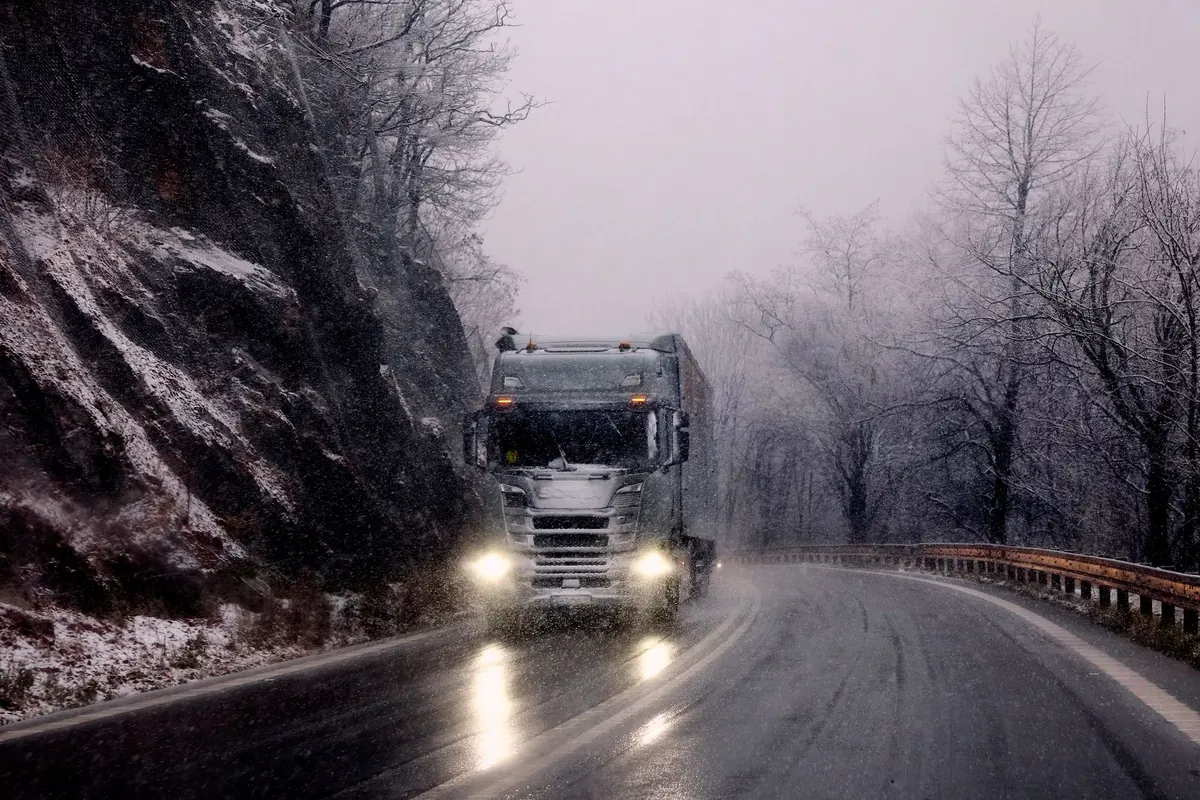
At about four o'clock on a cold afternoon, in depots across the country, someone opens a forecast and makes a decision that will shape the next morning's commute. Gritters are loaded, routes are checked, and the salt goes down — or it doesn't. The process behind that call is part weather science, part logistics and part budget arithmetic.
How the decision actually gets made
Councils do not rely on the general forecast on your phone. They buy a specialist road weather forecast built around road surface temperature rather than air temperature, and tailored to the specific stretches of road they treat.
Many authorities also hold a thermal map: a record, gathered by sensors fitted to vehicles, of how each section of road behaves in different conditions. A bridge on the edge of town and a sheltered valley lane will freeze at different times, and the map captures that difference.
Forecasters issue updates through the day. The main decision usually falls in the early afternoon for the night ahead, with a second look in the small hours if conditions shift. In unsettled weather there may be several decisions in one day.
Your phone says 3°C. The road may disagree
This is the part that catches people out. Air temperature is measured at around chest height in a standard screen. Road surface temperature is what actually matters, and the two can differ by several degrees.
Bridges and flyovers lose heat from above and below, so they freeze first. Cold air drains into valleys and sits there. Lanes shaded by trees or buildings can stay below freezing long after the sun has lifted temperatures elsewhere. A damp road at plus one degree is a bigger risk than a dry road at minus one, because moisture is what turns to ice.
So a council may grit when your app shows a mild night, and hold back when it shows a cold one. It is looking at the road, not the sky.
From depot to dual carriageway
Once the call is made, the mechanics are straightforward but slow. Gritters are loaded with rock salt, usually graded to around six millimetres, and many fleets now pre-wet the salt with brine as it leaves the spreader. Wet salt sticks to the road; dry salt bounces.
A route typically takes two to three hours to complete. Vehicles spread at different rates depending on the forecast — a light precautionary pass before frost forms, a heavier one during snow.
Two things decide whether it works. Salt needs moisture to dissolve and form the brine that lowers the freezing point of water, and it needs traffic to work it across the surface. A gritted road with no vehicles on it will stay white. That is why the busiest routes are treated first: they are the ones where the salt gets spread by tyres.
The routes that come first
Most authorities work to a priority network. The exact list differs by council, but the pattern is fairly consistent:
- Primary routes — main A roads, key bus corridors, routes to hospitals and emergency services, and the main connections between towns.
- Secondary routes — busier B and C roads, access to schools and larger employment sites, and main estate roads.
- Tertiary and other routes — treated only when conditions are severe and resources allow.
In most places the priority network covers somewhere between a third and a half of total road length. The rest is not overlooked by accident; it sits outside the plan.
Why your street is not on the list
If the gritter has never appeared on your road, there is usually a reason.
- It is not adopted. Private roads and unadopted lanes are the responsibility of the people who use them, not the council.
- A gritter cannot get through. Narrow streets with cars parked on both sides are a genuine problem. A spreader needs room, and a stuck gritter blocks the route for everyone behind it.
- It is a cul-de-sac or minor estate road. These sit below tertiary priority in most plans.
- It is a steep, narrow lane. Some gradients are unsafe for a loaded gritter in ice, and an attempt to treat them can make matters worse.
- It is a pavement. Footways are generally treated separately, if at all, and often only in town centres and around schools and surgeries.
Budget matters too. Salt, fuel, staff hours and vehicle wear all cost money, and every extra street lengthens a route. Add too many and the gritters may not finish the primary network before the frost arrives, which defeats the purpose.
What salt can and cannot do
Rock salt lowers the freezing point of water, but it is not magic. Its effectiveness falls away sharply below about minus five degrees Celsius, and at very low temperatures it does little at all. It also struggles on dry roads, where there is nothing for it to dissolve into, and it cannot shift thick, compacted snow or ice that has already bonded to the surface.
Salt takes time, as well. A freshly treated road is not instantly clear. It needs the salt to dissolve, traffic to mix it, and a little patience from drivers.
What you can do on your street
You cannot change the priority network. You can make your own patch safer.
- Check your council's website for its winter service page. Most publish gritting routes, salt bin locations and the triggers they use.
- Salt bins are for public use. If yours is empty, report it — refills are usually a scheduled job rather than an emergency call-out, but reports do get logged.
- Do not pour boiling water on ice. It melts, refreezes and leaves black ice that is harder to spot than the ice you started with. Salt, grit or sand is the better answer.
- Clear snow early, before it is walked flat and turns to ice. A shovel now saves a chisel later.
- Park considerately on nights when gritting is likely. A car left on a bend can take a whole street off the route.
- Look in on neighbours who are older or less steady on their feet. Icy pavements cause a lot of injuries, and the council is unlikely to have treated their path.
If conditions are genuinely bad, the oldest advice is still the best: travel only if you need to, and allow far more time when you do.
Photo: Stani Slavus / Pexels