Heatwave or Heat-Health Alert? Comparing UK and European Warning Systems
Britain talks about heat in a single breath: is it a heatwave, or isn't it? France and Spain ask a more useful question. Their warning systems are built around what the heat will do — to hospitals, care homes, outdoor workers and people sleeping in top-floor flats — rather than whether a thermometer crosses a neat line. That difference matters if you are packing a suitcase, and it matters even more once you are there.
Two different questions
A heatwave is a meteorological definition. The Met Office describes one as a period of at least three consecutive days where daily maximum temperatures reach thresholds set for each region — lower in Scotland, Wales and the north, higher in London and the South East. It is a useful way of comparing one summer with another.
An alert is something else entirely. It is a message to hospitals, councils, care homes, schools and employers telling them how seriously to take the next few days. The UK ran two systems side by side: weather warnings from the Met Office warning of impacts such as melting tarmac or pressure on water supplies, and heat-health alerts from the UK Health Security Agency aimed at the health and care sector. Both use the same four colours — green, yellow, amber and red — which is where a lot of the confusion starts.
How the UK does it
Heat-health alerts in England run from 1 June to the end of September. The colour-coded version arrived in 2023, replacing an older numbered system that nobody outside public health ever quite got used to.
- Green — normal summer conditions. No action expected beyond routine planning.
- Yellow — the heat may affect the most vulnerable. Care providers are asked to check on people at risk.
- Amber — significant impacts are likely across health and social care. Extra staff, checks and cooling measures.
- Red — a serious situation, with risk to life across the whole population, not just vulnerable groups.
The thresholds behind those colours vary by region of England, so an amber alert in the North East is not the same as an amber alert in London. Devolution adds another layer: Scotland, Wales and Northern Ireland run their own heat-health arrangements, so a "UK heatwave" headline rarely means one single set of rules.
The important point for anyone reading a forecast is that an amber heat-health alert is not a temperature reading. It means health and care services should be acting. It might arrive on a 30°C day in the Midlands or a 36°C day in Kent.
France: vigilance and the canicule plan
Météo-France publishes a national vigilance map, usually refreshed twice a day, using four colours: vert, jaune, orange and rouge. Heat appears as vigilance canicule, and it is issued department by department, not for the country as a whole.
The French definition of a canicule is deliberately strict. It is based on daytime and night-time temperatures staying above local thresholds for three consecutive days and nights. The night figures are the ones people underestimate. A 38°C afternoon is hard work; a 26°C night in a flat with no air conditioning is what sends elderly people to hospital.
Reading a French alert
Separate from the weather map, the national heatwave plan has four levels. Level 1 is the seasonal watch that runs through the summer. Level 2 is a warning that heat is coming. Level 3 is the alerte canicule, when town halls open cool rooms, activate registers of vulnerable residents and extend opening hours at pools and libraries. Level 4 is reserved for an exceptional, widespread event — the kind of scenario France has planned for since the deadly summer of 2003.
Orange vigilance in France is a public health instruction as much as a weather forecast. Treat it as a signal to change your plans, not just to drink more water.
Spain: thresholds built from mortality data
AEMET, the Spanish met agency, issues avisos by province and by zone — amarillo, naranja and rojo — based largely on forecast maximum temperatures. Yellow means be careful with certain activities; orange means significant risk; red means extreme risk, and usually comes with advice to stay indoors.
The temperatures that trigger those colours differ sharply across the country. An inland stretch of the Guadalquivir valley near Seville has a far higher threshold than the Galician coast, because the local climate is simply hotter. A 33°C day in A Coruña and a 33°C day near Córdoba are not the same event, and the warnings reflect that.
Spain then adds a health layer on top. The national prevention plan uses a "threshold temperature" for each province, calculated from historical data on when deaths begin to rise — not from what feels uncomfortable. Regional health authorities translate that into their own colour-coded risk levels, and some cities have gone further: Seville has piloted naming heat episodes in the way storms are named, to raise public awareness.
What the differences mean for travellers
The practical upshot is simple: never compare alert colours across borders, and never assume a country is overreacting or underreacting because of the number on your weather app.
- A UK amber alert is not a heatwave warning in the Spanish sense. It is an instruction to the health system, issued well before temperatures approach anything southern Europe would consider remarkable.
- A Spanish orange warning can arrive at temperatures Britain would call a warm day. The threshold reflects local acclimatisation and housing, not drama.
- Nights carry more weight than most visitors expect. French and Spanish systems both factor in overnight conditions; British ones increasingly do too.
- Regional detail is everything. Alerts are issued for departments, provinces and English regions — check the area you are actually staying in, not the national headline.
- Heat alerts describe impacts, not just temperature. Water shortages, wildfire risk, transport disruption and hospital pressure all feed in.
Learn a handful of words before you travel. In France: canicule, vigilance orange, hydratez-vous. In Spain: aviso naranja, golpe de calor (heatstroke), a la sombra (in the shade). Being able to read a pharmacy poster or a town hall notice is genuinely useful.
A five-minute routine before you go
- Check the national forecaster for your destination: the Met Office and UKHSA for the UK, Météo-France's vigilance map for France, AEMET for Spain. Look at the regional or departmental view.
- Note the current alert level for the exact area you are visiting, and check it again each morning. Levels can change within a day.
- Think about your own risk. If you take medication that affects sweating, blood pressure or kidney function, or you are pregnant, or you are travelling with a baby or an older relative, speak to a pharmacist or GP before you travel rather than after.
- Plan around the middle of the day. Spanish towns empty between roughly 2pm and 5pm for good reason; in France, shutters close when the sun hits the glass.
- Confirm what your accommodation actually offers. Air conditioning is standard in much of Spain and far from guaranteed in northern France, let alone the UK.
- Have a Plan B that involves shade, water and a cool indoor space, and be willing to use it.
A heat alert is not a verdict on your holiday. It is information from people whose job is to know how the next few days will affect a population — and once you can read it, it is some of the most useful information a traveller can have.
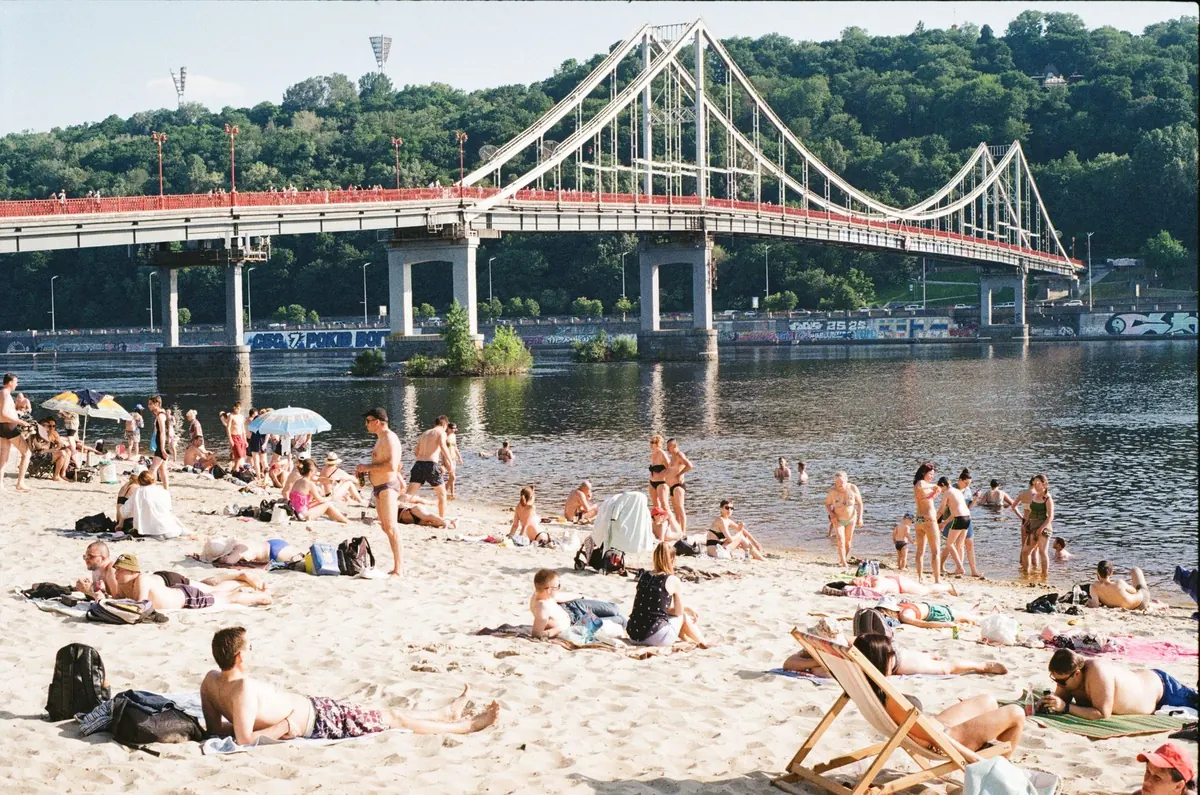
Photo: Mykhailo Volkov / Pexels